
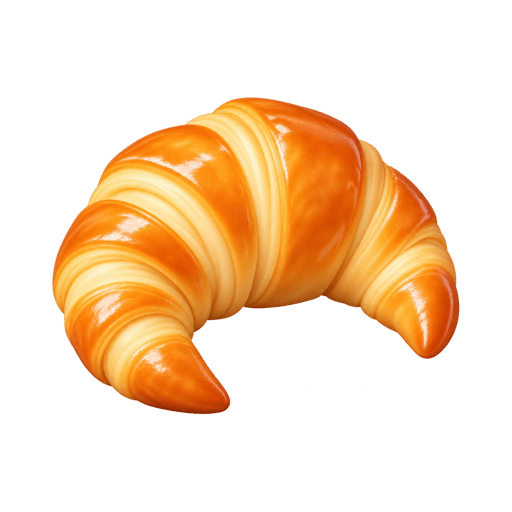
Croissant
A butter croissant has 231 calories, 12 g of fat and 5 g of protein, with about 6 g of added sugar, less than a glazed doughnut or a blueberry muffin.
In 1 croissant, 57 g
231calories
- 5g protein
- 26g carbs
- 12g fat
- 1.5g fiber
- 6.4g added sugar
Our take
A croissant is mostly flour and butter, with little protein or fiber. Treat it as the bread of a breakfast and put eggs or Greek yogurt and fruit next to it, so the plate gets to the 30 g of protein a meal needs.
Vitamins and minerals
High in selenium.
- Selenium12.9 mcg24%
- Folate74.1 mcg19%
- Thiamin (B1)0.2 mg18%
- Vitamin A117.4 mcg13%
- Riboflavin (B2)0.1 mg11%
- Niacin (B3)1.2 mg7%
- Iron1.2 mg7%
- Zinc0.4 mg4%
- Vitamin B120.1 mcg4%
- Vitamin E0.5 mg3%
- Magnesium9.1 mg2%
- Vitamin B60 mg2%
- Calcium21 mg2%
- Potassium67 mg1%
- Vitamin K1 mcg1%
- Sodium218.9 mg10%
Share of the Daily Value in one serving. High in: 20% of the Daily Value or more in a serving (21 CFR 101.54(b)).
Tips
- Make it a sandwich with egg and cheese. Two eggs add 12 g of protein, and an ounce of cheddar adds 7 g.
- Warm a day-old croissant in the oven or toaster oven for a few minutes to crisp it again. The microwave makes it soft and chewy.
- Freeze extras the day you buy them, wrapped tight, and warm them in the oven to serve.
Swaps
 Whole wheat breadTwo slices of toast are 138 calories with almost 4 g of fiber, against the croissant's 231 and 1.5.
 BagelAbout the same calories, 245, with 9 g of protein and almost no fat.
 Easily log it with a photo in Food XRAY to see how it fits your day's targets.