
Benchmarks
Measure your physical and mental strength.
 Sleep
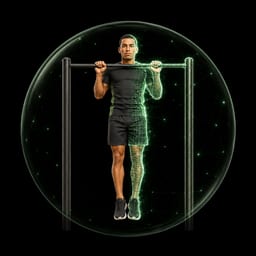 Pull Strength
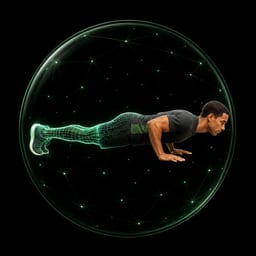 Push Strength
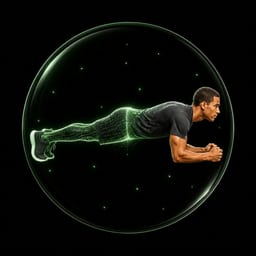 Core Strength
 Focused Percentage
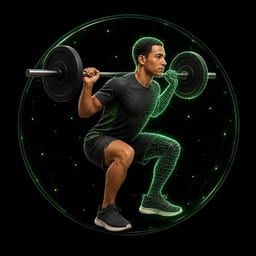 Leg Strength
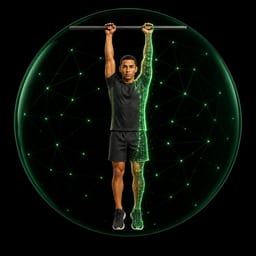 Grip Strength
 VO₂ Max
 Phone
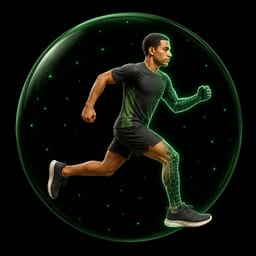 1-Mile Run
 BOLT Score
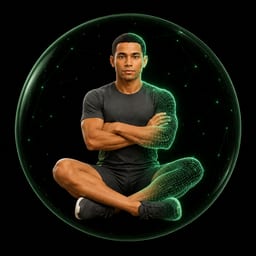 Sit-Stand Test
 Mobility Squat
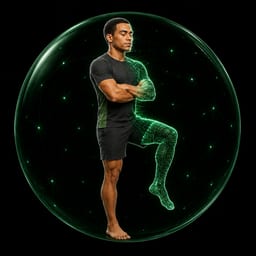 Balance
 Bodyfat
 Flash Tap
 Signal Stream
 Tile Path
 Heart Rate Variability
 Color Clash
 Number Trail
 Oddball Hunt
 Total Screen Time
 N-Back Grid
 Time Keeper
 Tower Plan
Why test yourself
Benchmarks help you measure changes in your health and abilities over time. Establishing a baseline gives you and your AI coach better information to help maintain your physical and mental strength.
- Use it or lose it.Strength can fade when we don't maintain it. How strong you are later in life depends on more than your age. The way you move and train over the years matters too. Regular benchmarks help you see how your strength is changing, so you can decide what to work on.
- Track your strength as you lose weight.Your weight is only part of the picture. Tracking your strength alongside your weight helps you see how your physical performance changes as you lose weight. Repeat tests such as a plank, squat or hang to keep a record.
- Track your mental performance.Sleep, stress and alcohol can affect your reaction time, focus and memory. Repeat the same tests over time to see how your results change. Looking at your results alongside your habits can help you spot patterns to explore.
- Build a baseline for the future.A result you record today gives you a reference for the years ahead. Repeating the same tests can help you notice a decline in strength, balance, focus or memory that you might otherwise miss. Recognizing a change early gives you a chance to investigate it, adjust your habits or get advice while there is still an opportunity to improve.
Benchmarks for your body
Explore the qualities behind how you move, from strength and endurance to mobility and balance. Run a benchmark in the app, then follow your results over time.
Strength benchmarks
Pull, push and hold. Explore how much force you can produce and how long you can sustain it.
 Strength
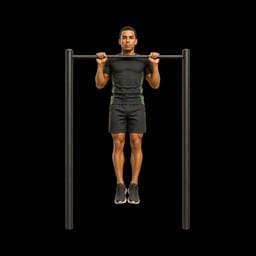
 EndurancePull-upsPull StrengthStrict pull-ups completed in one set.The scienceRelative upper-body strength tracks lean mass and metabolic health through midlife, and low pulling strength predicts later mobility limits. Reps in one strict set is the field version of the lab test.
 Strength
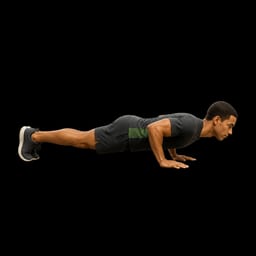
 HeartPush-upsPush StrengthPush-ups in one unbroken set, or your best bench press set.The sciencePush-ups are a repeatable way to track upper-body muscular endurance. A ten-year study of male firefighters found an association between higher push-up capacity and fewer cardiovascular events.
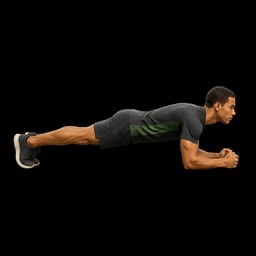 StrengthEndurancePlankCore StrengthSeconds you can hold a forearm plank with a straight line.The scienceTrunk endurance protects the spine and steadies gait. Weak core musculature is linked with chronic back pain and with poorer balance in older adults, and a plank hold is the simplest repeatable measure of it.
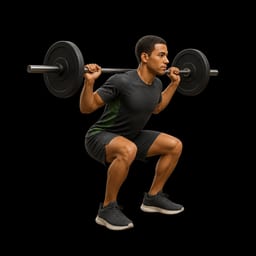 StrengthSquatLeg StrengthYour best squat set, converted to an estimated one-rep max.The scienceLower-body strength predicts falls, disability and cognitive decline in later life, and correlates with mitochondrial health. A heavy squat set, scored against your bodyweight, is the most direct measure of it.
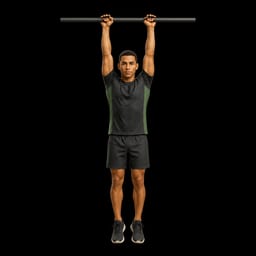 StrengthEnduranceDead hangGrip StrengthSeconds you can hang from a bar with straight arms.The scienceGrip strength is among the strongest single predictors of longevity in population studies. A hang combines hands, forearms, shoulders and trunk into one measurement without a dynamometer; past a minute is the band to aim for.
Endurance benchmarks
Explore your aerobic fitness, running pace and comfort during a brief breath hold.
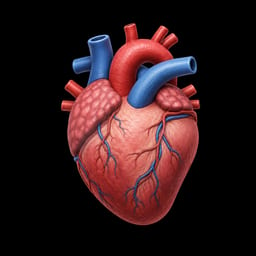 EnduranceHeartAerobic capacityVO₂ MaxPeak oxygen your body can use, from a wearable, a lab or a field test.The scienceCardiorespiratory fitness is one of the strongest predictors of all-cause mortality known. Across 122,007 treadmill tests at the Cleveland Clinic, low fitness carried five times the mortality hazard of elite fitness, with no ceiling to the benefit in their data.
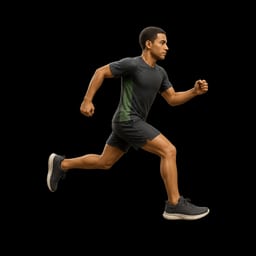 EnduranceHeartMile time1-Mile RunFastest time over one mile on flat ground.The scienceMile pace bundles aerobic fitness, running economy and willingness to suffer into one number. A midlife mile slower than 12 minutes flags elevated cardiovascular risk, and pace tracks biological aging rate.
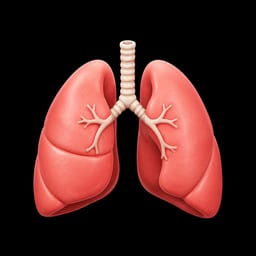
 BreathBreath holdBOLT ScoreSeconds after a normal exhale until the first urge to breathe.The scienceThis test records the time from a normal exhale to the first urge to breathe. Compare your results under the same conditions to follow this specific breath-hold measure over time.
Mobility & balance
Move through your range, stay steady and get up from the floor.
 Strength
 Mobility
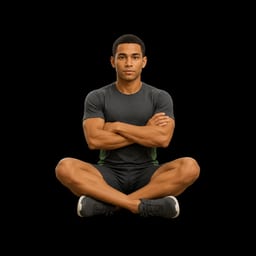
 BalanceFloor riseSit-Stand TestWhether you can sit to the floor and stand back up without hands.The scienceIn a cohort of 2,002 adults aged 51 to 80, lower sitting-rising scores went with higher all-cause mortality over six years, after adjusting for age, sex and body mass. One movement bundles leg strength, joint mobility and balance.
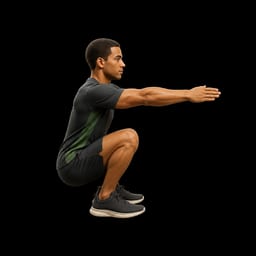 MobilityDeep squatMobility SquatWhether you can hold a full-depth bodyweight squat, heels down, for 30 seconds.The scienceReaching and holding a deep squat needs ankle, hip and thoracic mobility together. Losing it is an early marker of structural stiffness, injury risk and, later, of lost independence.
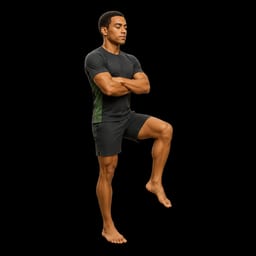 BalanceOne leg, eyes closedBalanceSeconds on one foot with your eyes closed and arms crossed.The scienceClosing your eyes takes vision out of the loop and isolates the vestibular and cerebellar systems. In 1,702 adults aged 51 to 75, failing the easier eyes-open 10-second stand came with an 84% higher mortality hazard over seven years.
Benchmarks for your mind
Short games explore your speed, focus, memory and control. Build a personal baseline and see how your results change across sessions.
Speed & flexibility
React to a signal, scan for a target and switch between rules.
 Speed
 StabilitySpeedFlash TapSimple reaction time: tap the circle the instant it lights up.The scienceA simplified psychomotor vigilance task. Median reaction time, lapses over 500 ms and trial-to-trial variability are the classic markers of sleep loss and fatigue, which is why this one moves with last night.
 ControlSpeedNumbersNumber TrailCognitive flexibility: connect the trail, then alternate numbers and letters.The scienceA tap version of the Trail Making Test, a neuropsychology staple since the 1940s. The extra time part B costs over part A is the set-shifting number, and it is one of the more sensitive markers of mental fatigue.
 Speed
 FocusStabilityOddballOddball HuntVisual search: find the one shape that does not match.The scienceA classic visual search paradigm. Search time and its variability reflect selective attention; rising variability across trials is attention drifting, which shows before accuracy does.
Focus & control
Stay with a task, resist distractions and keep your timing consistent.
 FocusControlSpeedStabilityFocusSignal StreamSustained attention: act on the go signal, hold back on the stop.The scienceA Go/No-Go task. Missed targets show lapses of attention; taps on the rare stop signal show impulsivity. Healthy adults land near 97% hits and about 12% false alarms, and both slide with stress and poor sleep.
 ControlFocusColorsColor ClashExecutive control: name the ink color while the word argues with you.The scienceThe Stroop effect, first described in 1935 and still the workhorse test of interference control. The gap between mismatched and matched trials, typically 150 to 250 ms, is the number that tightens with training and widens under load.
 FocusStabilityTimingTime KeeperInterval timing: tap when you think the target seconds have passed.The scienceInterval timing has a systematic bias (early or late) and a noise term (the coefficient of variation). Noisy timing is a documented feature of ADHD and relates to difficulty with pacing and waiting.
Memory & planning
Hold information in mind, update it and plan your next move.
 MemoryFocusMemoryTile PathVisuospatial working memory: repeat a growing path of tiles.The scienceBuilt on the Corsi block-tapping test, the standard measure of spatial span. Healthy adults average around six items; the number itself matters less than how your own span drifts with sleep and stress.
 MemoryFocusControlStabilityThe GridN-Back GridWorking memory updating: tap when the tile matches two steps back.The scienceThe n-back is the most studied working memory task in cognitive neuroscience. Sensitivity (d′) separates real matching from guessing; novices sit around 1.0 to 1.5 and trained scores pass 2.0.
 ControlMemoryPlanningTower PlanPlanning: rebuild the tower in as few moves as possible.The scienceModeled on the Tower of London planning task. Moves above the optimal solution, rule breaks and how long you pause before the first move are the markers of goal-directed planning, which declines with fatigue and age.
Start tracking
Measure yourself in the app.
Download Gyroscope and run any benchmark in about a minute. See how you compare to your peers, to the studies, and to your own baseline over time. Are you getting stronger?
Benchmarks are included in all premium memberships.