
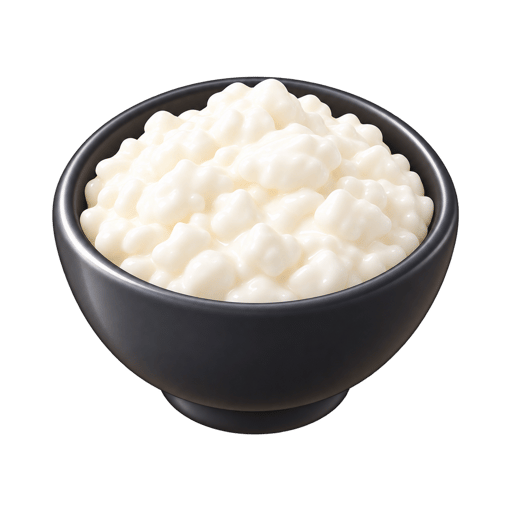
Cottage cheese
A cup of cottage cheese has 217 calories and 26 g of protein, about as much as a palm-sized piece of chicken breast, with more than a third of the day's vitamin B12 and selenium.
In a cup, 210 g
217calories
- 26g protein
- 6g carbs
- 9g fat
- 0g fiber
- 0g added sugar
Our take
Cottage cheese is one of the easiest ways to eat a lot of protein with no cooking. It's also salty, with about 660 mg of sodium in a cup, close to a third of the day's limit, so pair it with foods that have little salt, like fruit and vegetables.
Vitamins and minerals
High in vitamin B12, selenium and riboflavin (B2).
- Vitamin B120.9 mcg38%
- Selenium20.4 mcg37%
- Riboflavin (B2)0.3 mg26%
- Calcium126 mg10%
- Vitamin A77.7 mcg9%
- Zinc0.8 mg8%
- Folate25.2 mcg6%
- Vitamin B60.1 mg6%
- Magnesium16.8 mg4%
- Potassium177 mg4%
- Thiamin (B1)0 mg3%
- Niacin (B3)0.3 mg2%
- Iron0.3 mg2%
- Vitamin E0.2 mg1%
- Vitamin D0.2 mcg1%
- Sodium661.5 mg29%
Share of the Daily Value in one serving. High in: 20% of the Daily Value or more in a serving (21 CFR 101.54(b)).
Tips
- Top it with fruit for a sweet breakfast with no added sugar. A cup of pineapple adds 76 calories, and a cup of blueberries adds 81.
- Blend it smooth and use it in place of ricotta in lasagna, or in place of sour cream in a dip.
- Low-fat (1%) cottage cheese has about the same protein for fewer calories, since the difference is the fat. Cottage cheese: protein per serving and per dollar
- Compare the sodium on the labels and pick the lowest one you like.
Swaps
 Greek yogurt, plain17 g of protein in a 100 calorie container, with only 61 mg of sodium.
 Yogurt, plain nonfat13 g of protein a cup for 127 calories, with a third of the day's calcium.
 Easily log it with a photo in Food XRAY to see how it fits your day's targets.