
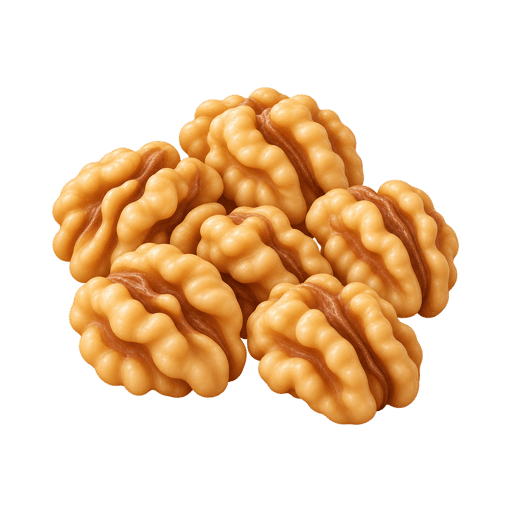
Walnuts
An ounce of walnuts, about 14 halves, has 185 calories, 18 g of fat and 4 g of protein. It also has about 2.6 g of ALA, the plant omega-3, which is more than the 1.1 to 1.6 g adults are advised to get in a day.
In 1 oz (14 halves), 28 g
185calories
- 4g protein
- 4g carbs
- 18g fat
- 1.9g fiber
- 0g added sugar
Our take
Walnuts have more fat and less protein than almonds, with 4 g of protein for 185 calories against almonds' 6 g for 164. They're best as a topping on oatmeal, yogurt or a salad, where an ounce adds crunch and omega-3 and the rest of the meal brings the protein.
Vitamins and minerals
- Magnesium44.2 mg11%
- Vitamin B60.2 mg9%
- Thiamin (B1)0.1 mg8%
- Zinc0.9 mg8%
- Folate27.4 mcg7%
- Iron0.8 mg4%
- Niacin (B3)0.5 mg3%
- Riboflavin (B2)0 mg3%
- Potassium125 mg3%
- Selenium1.4 mcg2%
- Calcium29 mg2%
- Vitamin E0.2 mg1%
- Vitamin K0.8 mcg1%
Share of the Daily Value in one serving. High in: 20% of the Daily Value or more in a serving (21 CFR 101.54(b)).
Tips
- The omega-3 in walnuts is ALA. Your body turns only a little of it into the DHA and EPA in fish, so fish and seafood are still the main food sources of those. What foods are high in omega-3?
- Weigh an ounce, or count 14 halves, since walnuts are easy to pile onto a bowl.
- Toast them in a dry pan for a few minutes to bring out the flavor, then chop them over oatmeal or Greek yogurt.
Swaps
 Easily log it with a photo in Food XRAY to see how it fits your day's targets.