
Overnight Oxygen
Sleep has a second number. Most nights there is nothing to see, which is exactly why the one night that is different stands out.
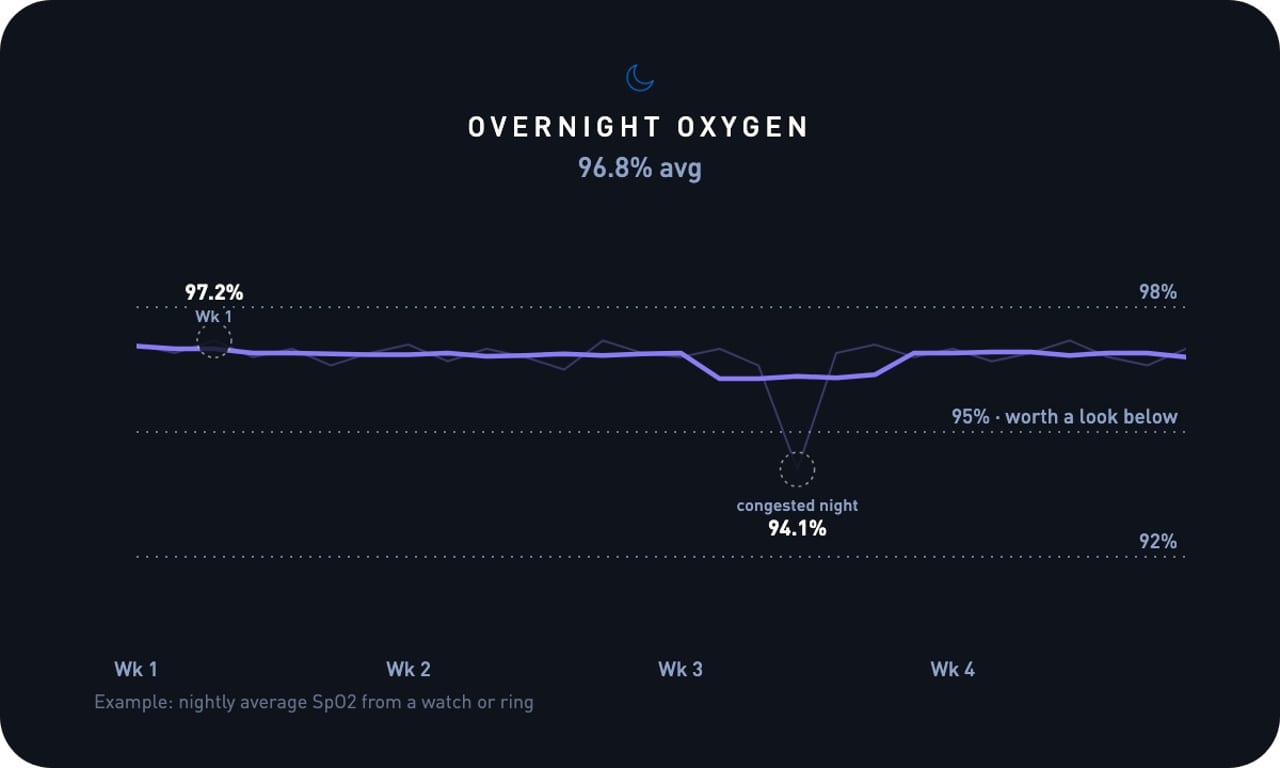
Overnight oxygen is the share of your blood carrying oxygen while you sleep, averaged per night. Healthy adults usually sit between 95 and 98%, and most nights the line barely moves.
That flatness is the point. A number that hardly changes makes the night that does change easy to see: a cold, a week at altitude, or a run of lower nights that has no obvious explanation.
In a five-year study of older adults, the average overnight oxygen and the time spent below 90% were the oxygen measures most consistently linked to later cognitive decline. A boring chart is good news.
What it is
A watch or ring shines light into the skin and reads how much is absorbed to estimate oxygen saturation. Overnight it samples repeatedly and reports an average for the night, along with the lowest reading.
The chart above is four normal weeks with one exception: a night at 94% when the person had a cold. Consumer devices flag dips below about 90%; treat those as a prompt to look, not a diagnosis. Wrist and finger sensors are noisier than a clinical oximeter, and a loose band alone can produce a false dip.
The pattern worth taking seriously is repeated: a run of nights lower than your own usual, especially alongside snoring, waking unrefreshed, or a higher resting heart rate. That is the chart to bring to a doctor. One low night with a stuffy nose is not.
Why it matters for your goals
If you want more energy and focus
Repeated dips overnight are one of the reasons a full eight hours can still leave you unrefreshed. If the mornings feel heavy and the oxygen line has been running lower than your usual, the two belong in the same conversation with a doctor.
If you want to live longer
Average overnight oxygen and time below 90% were the measures most consistently tied to later cognitive decline over five years in older adults. The chart is cheap to keep and the pattern it catches is one worth catching early.
If you want to lose weight
Excess weight narrows the airway at night, and alcohol relaxes it further. A lower oxygen line often improves as weight comes off, which makes it one of the quieter rewards of a diet that is working.
Where people land
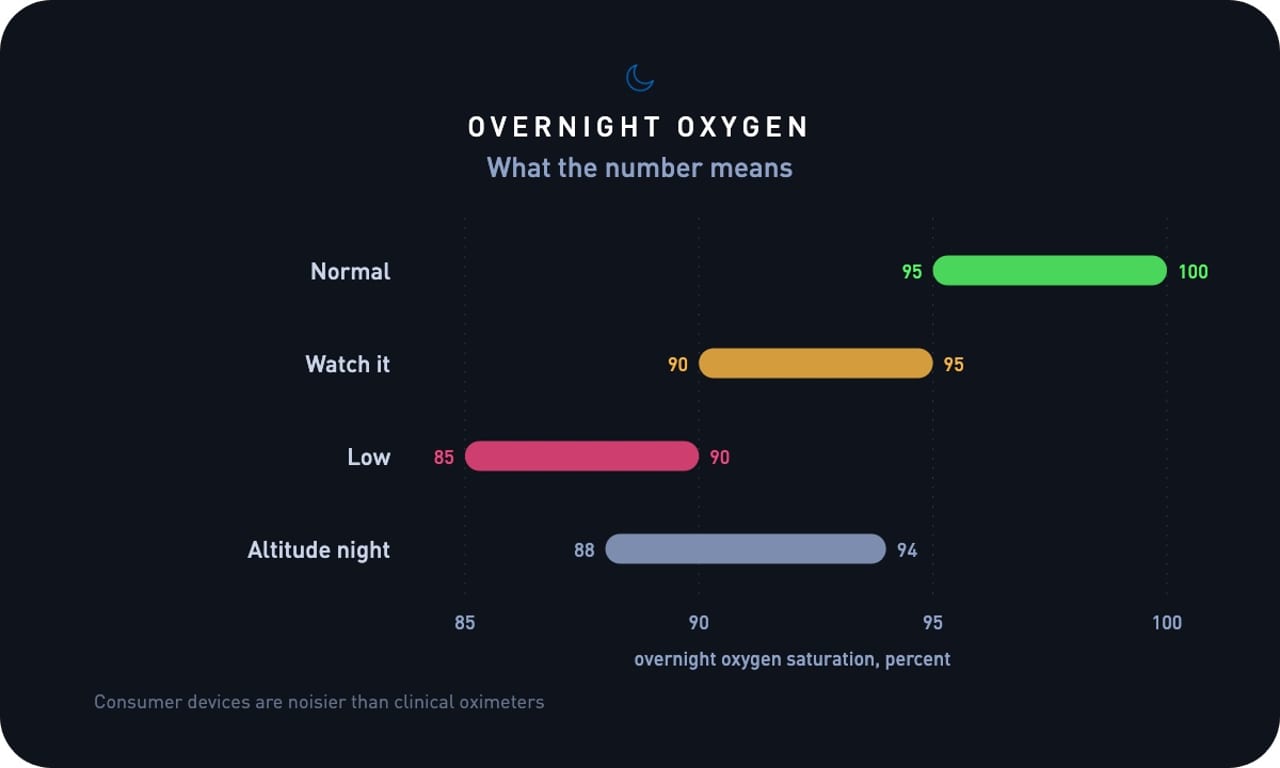
| 95 to 100% | normal |
|---|---|
| 90 to 95% | watch it, especially if repeated |
| Below 90% | low; a prompt to look, not a diagnosis |
| Altitude night | 88 to 94% is common for everyone |
Consumer devices are noisier than clinical oximeters. Read your own average over weeks, and treat a single dip as a question about the band, the cold, or the altitude before anything else.
What the research found
Overnight oxygen has mostly been studied in sleep clinics. The consumer-device studies are newer, and the large ones point at the same two numbers: the average, and the time spent low.
In a five-year study of older adults, average overnight oxygen saturation and time spent below 90% were the oxygen measures most consistently associated with later cognitive decline. (Marchi et al., European Respiratory Journal, 2023). One low night with a cold is nothing. A run of lower-than-usual nights, especially with snoring, is the chart to show a doctor.
A 2018 analysis of 4,098 nights from 246 adults found that alcohol raised heart rate and lowered HRV during the first hours of sleep at every dose measured, including low intake, and the effect grew with the amount. It held across ages and fitness levels. (Pietilä et al., JMIR Mental Health, 2018). Alcohol relaxes the airway as well as raising heart rate in the first hours of sleep. If the dips cluster on drinking nights, you have found the lever.
What moves it
Up, over weeks. Losing excess weight. Less alcohol in the evening. Side sleeping. Treating a blocked nose. Coming back down from altitude.
Down, within a night. A cold or congestion. Alcohol, which relaxes the airway. Back sleeping. Altitude, which drops it for everyone. A loose band, which produces a false dip rather than a real one.
This week. Snug the band one notch and try side sleeping. If the line is still lower than your usual after a week with no cold and no drinks, that is the week to talk about.
Everything known to move it
Overnight oxygen is a quiet number, which makes the short list of things that move it easy to learn. Half of them are about the airway and the other half are about the sensor.
Lifestyle and environment
| Side sleeping | raises | Keeps the airway more open than lying on your back; the most common fix for a night of dips. |
|---|---|---|
| Back sleeping | lowers | Gravity narrows the airway and snoring gets louder; dips cluster on the nights you end up on your back. |
| Altitude | lowers | Lower for everyone in thin air, by a few points in a mountain town, and it recovers when you come down. |
| Congestion or a cold | lowers | A blocked nose alone can cost a percentage point for a few nights. |
| Smoke and poor air | lowers | Wildfire smoke and heavy pollution nights tend to show as a lower average. |
| A loose band or ring | mixed | Produces false dips and missing stretches rather than a real change; snug the sensor before reading anything into a night. |
Nutrition
| Alcohol in the evening | lowers | Relaxes the airway as well as raising heart rate in the first hours of sleep; dips cluster on drinking nights. Pietilä et al., JMIR Mental Health, 2018 |
|---|---|---|
| Late large meal | lowers | A full stomach and reflux make the first hours more restless and the breathing shallower. Kinsey & Ormsbee, Nutrients, 2015 |
| Losing excess weight | raises | Less tissue around the airway is the lever with the biggest long-term effect on snoring and overnight dips. |
Training
| Regular aerobic exercise | raises | Better breathing mechanics and weight control together; the effect shows over months, not nights. |
|---|
Sleep
| Sleep deprivation | lowers | Deeper, heavier sleep after short nights relaxes the airway muscles more. |
|---|---|---|
| Consistent schedule | steadies | Keeps the deep-sleep blocks and the breathing pattern landing at the same hours. |
Supplements and medical
| Sedatives and sleep aids | lowers | Anything that relaxes muscle tone relaxes the airway too. Talk to a doctor before changing a prescription. |
|---|---|---|
| Smoking and nicotine | lowers | Inflames the airway and makes snoring worse; quitting raises the average over time. |
| Nasal strips or saline rinse | raises | Cheap fixes for a congested nose, which is often the whole story. |
| Sleep apnea | lowers | Repeated dips below 90% with snoring and unrefreshing sleep are the pattern to show a doctor. Treatment restores the line. Marchi et al., European Respiratory Journal, 2023 |
Gyroscope runs these correlations on your own data: open the trend, tap a low night, and the coach checks the drinks, the cold, and the altitude before anything else.
Targets to aim for
| Good | A nightly average of 95% or higher |
|---|---|
| Great | A flat line around 96 to 98% with no nights below your usual |
| Watch | A run of nights under your own usual, or repeated dips below 90% not explained by altitude or a cold |
| See a doctor | Repeated low nights alongside snoring, waking unrefreshed, or a higher resting heart rate. Bring the chart. |
Practical ways to improve it
- Sleep on your side. It keeps the airway more open than lying on your back.
- Move the last drink earlier or skip it. Alcohol relaxes the airway and the dips tend to cluster on those nights.
- Clear your nose before bed. Congestion alone can cost a percentage point.
- Wear the band snug but not tight. A loose sensor is the most common cause of a scary-looking night.
- Ignore ski-trip weeks. Altitude lowers it for everyone, and it recovers when you come down.
How to track it
Overnight oxygen needs a device with an optical oxygen sensor that you wear to bed. Apple Watch Series 6 and later, Oura, Whoop 4.0 and later, Garmin with Pulse Ox, and most recent Fitbits measure it. Older bands and chest straps do not.
There is no meaningful manual fallback. A fingertip pulse oximeter gives a spot reading while you are awake, which is a different number from the overnight average; log it if you like, but do not compare the two.
| Apple Watch Series 6 and later | Automatic through Apple Health |
|---|---|
| Oura, Garmin, Fitbit | Direct integration in Settings |
| Whoop and most other wearables | Through Apple Health |
| No oxygen sensor | Not available; track duration, timing, and resting heart rate instead |
How Gyroscope tracks it
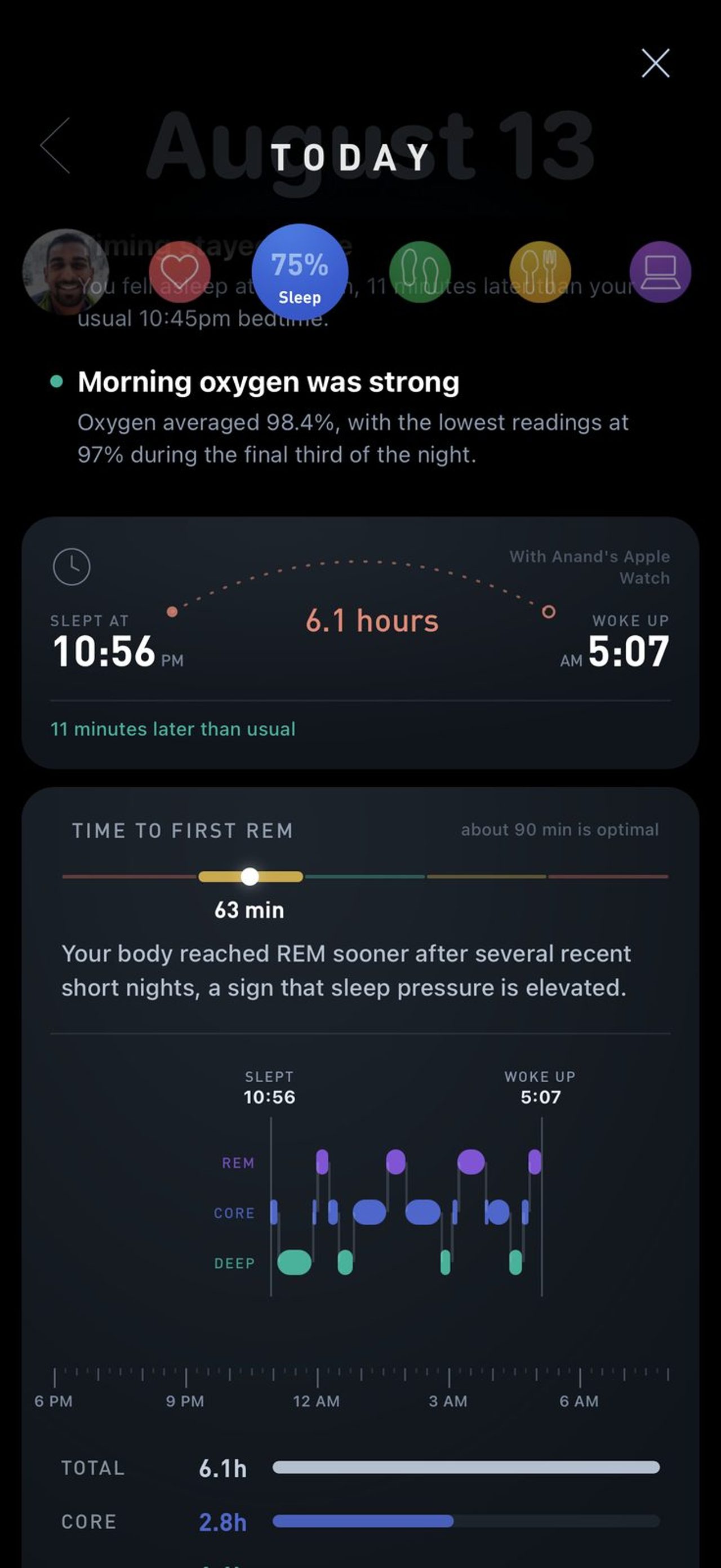
Wear your device to bed and the number arrives each morning. Gyroscope reads the overnight readings from Apple Watch, Oura, Whoop, Garmin, or Fitbit, averages the night, keeps the lowest reading, and charts both against your own baseline. History comes in with the first sync.
Each morning the Sleep Score shows the average with its context: oxygen averaged 98.4%, lowest readings at 97% during the final third of the night. On the Trends tab it sits next to resting heart rate, breathing rate, and alcohol, which is where a dip usually explains itself. Ask the coach about a low night and it reads those together.
It needs about two weeks before your own baseline is meaningful. Different sensors read a point or two apart, so compare yourself over time rather than against someone on a different watch.
Works with Apple Watch, Oura, Whoop, Garmin, Fitbit.
Questions people ask
- What is a normal overnight oxygen level?
- Healthy adults usually average 95 to 98% overnight. Consumer devices flag dips below about 90%.
- My watch showed one night at 92%. Should I worry?
- Not from one night. Check the band, think about whether you had a cold or a drink, and watch the next week. A repeated pattern is the thing to act on, not a single reading.
- Is a wrist sensor accurate?
- Accurate enough for a trend, not for a diagnosis. Wrist and finger sensors are noisier than a clinical oximeter, and a loose band produces false dips. Read the weekly average.
- When should I see a doctor?
- A run of nights lower than your usual, especially with snoring, waking unrefreshed, or a higher resting heart rate. The chart is the useful thing to bring.
Track your Overnight oxygen
Included in the free app. Download Gyroscope, connect your device, and the trend builds itself.
Get Gyroscope