
You will spend about 30% of your life asleep. That is 20 to 30 years.
Almost nobody gets those years at full strength. The same eight hours in bed can rebuild you one night and barely count the next, and without measurement you never find out which one you got. Weight loss, focus, mood, willpower: sleep sits underneath all of them, and when it slips, everything else gets harder.
It slips for a reason. Blue light long after sunset, stress that follows you to bed, late processed meals, caffeine that outlasts the feeling of it, rooms warmer and brighter than anything your biology evolved for.
So we rebuilt the sleep system from the ground up. It is faster, it is smarter, and every report is personal to your data, your food and your DNA. It is live now in the latest version of the app.
What changed
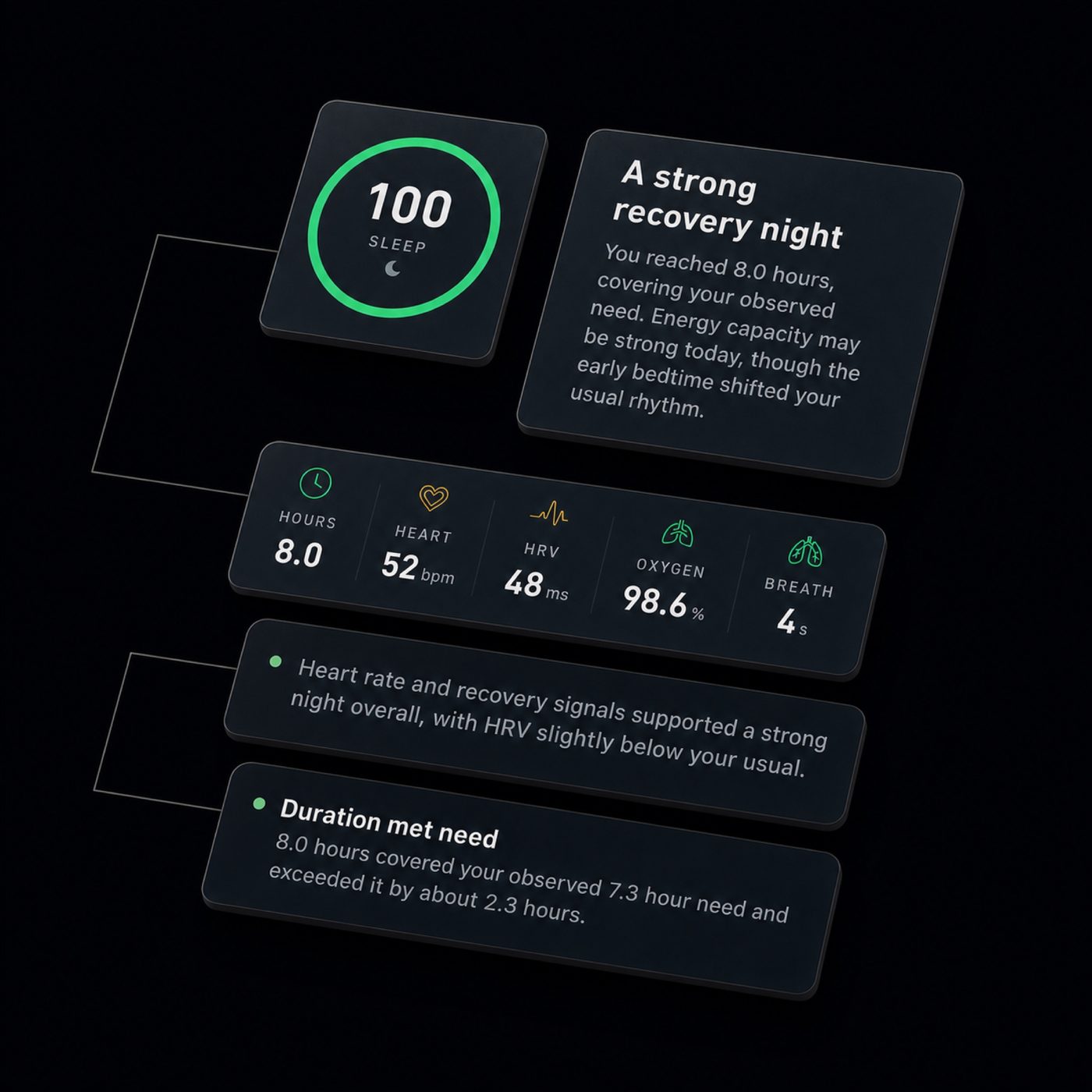
Speed first. New infrastructure runs the analysis in fast priority mode, which used to be Max only and is now on for every member. Your Sleep Score lands about 2 to 3 times faster than before, and a notification tells you the moment it is ready.
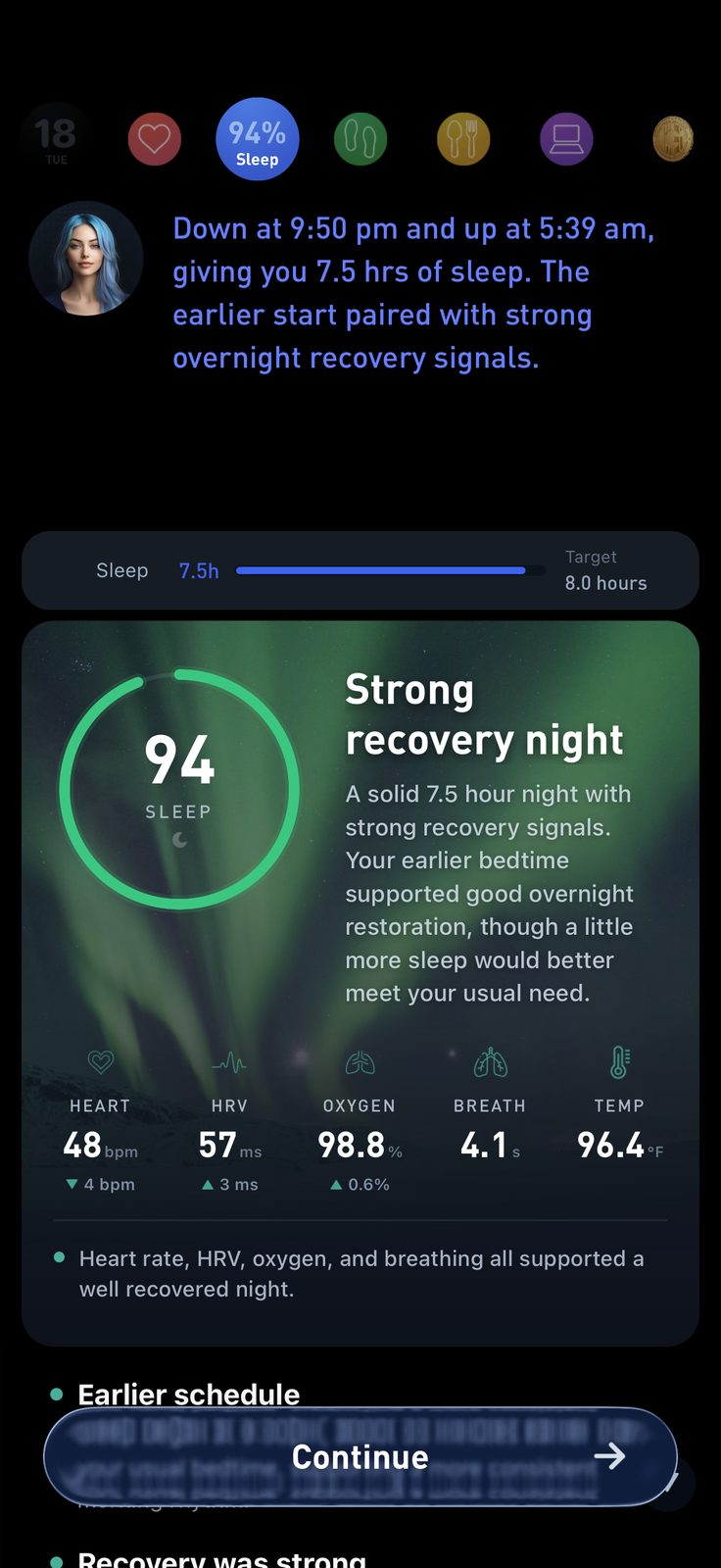
The report explains your sleep measurements in plain language. It compares stages, heart rate, HRV, oxygen, breathing and temperature with your previous nights and suggests habits to try.
And reliability. Loading problems with various devices are fixed: a night either saves or tells you exactly why it could not. Background sync is more automatic, including re-pulling late HRV from Garmin and Oura.
- Sleep Score and full report, about 2 to 3 times faster
- Oura, Garmin, Whoop, Fitbit and Apple Watch all feed the system
- Support for daytime naps
- Nonstandard sleep mode for night workers and daytime sleepers
- Continuous caffeine and nutrition monitoring
- Sleep Debt and the Sleep Battery, metered separately from the score
- A notification the moment your score is ready
Every report is personal to you
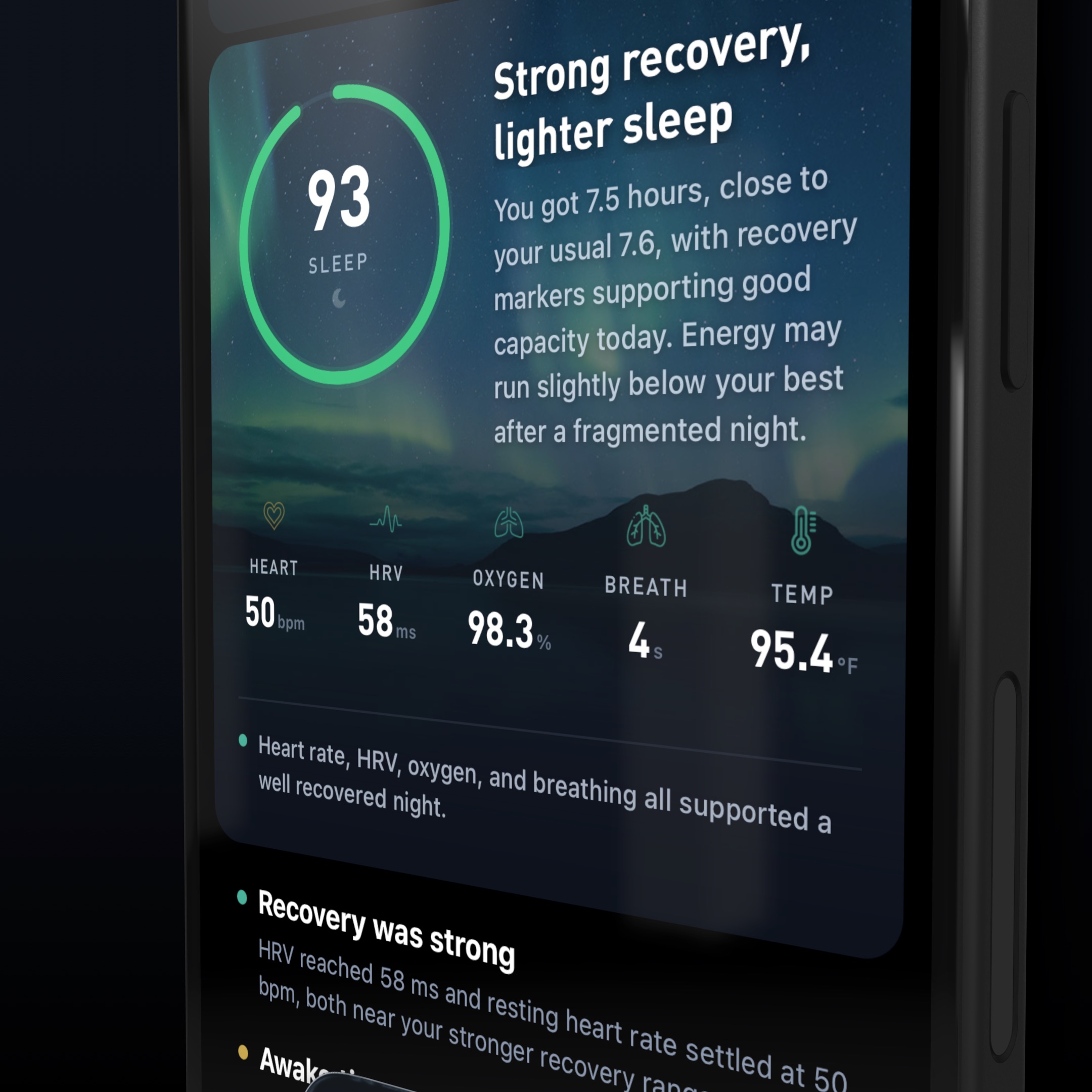
A resting heart rate of 55 bpm is ordinary for one person and unusual for another. The same goes for HRV, bedtime, temperature and duration. Because the system learns from your own nights, it can tell the difference between "outside a population range" and "different for you," and it only flags the second kind.
The insights also change with how you live: what you eat and when, what you drink, your coffee habits, whether you had alcohol, your bedtime and wake time. If you have connected DNA, your variants are factored in, including how sensitive you are to caffeine, alcohol and late meals.
400mg of caffeine taken six hours before bed cut measured sleep by about an hour, and participants did not notice the difference themselves. (Drake et al., Journal of Clinical Sleep Medicine, 2013). The caffeine monitor shows how much is still active at your bedtime, using your own clearance rather than a universal cutoff.
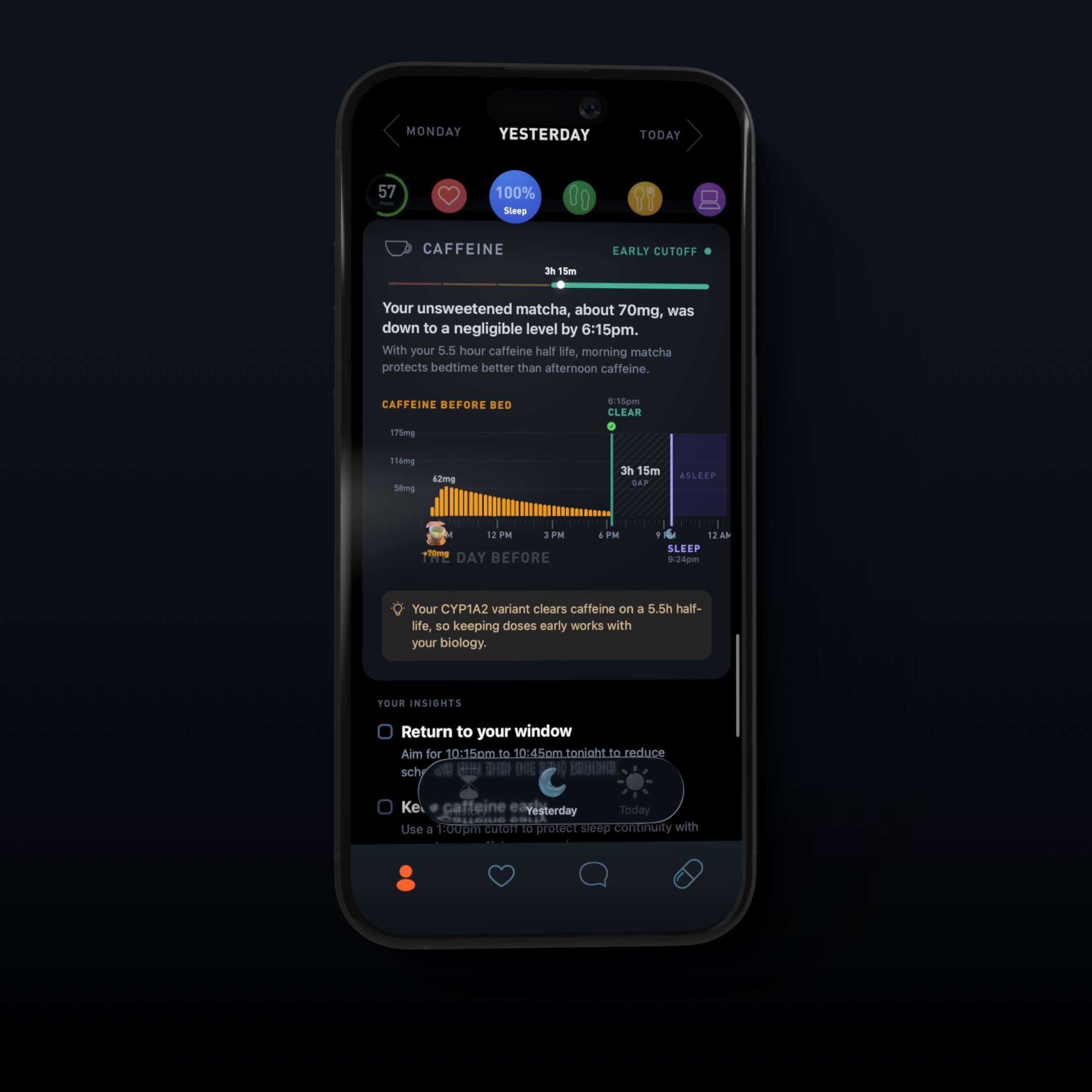
The caffeine monitor draws the curve for every coffee, tea or matcha you log, shows when it clears, and measures the gap to your bedtime. If your DNA is connected it uses your own CYP1A2 half-life, so a fast metabolizer and a slow one get different cutoffs from the same cup.
Nutrition Before Sleep
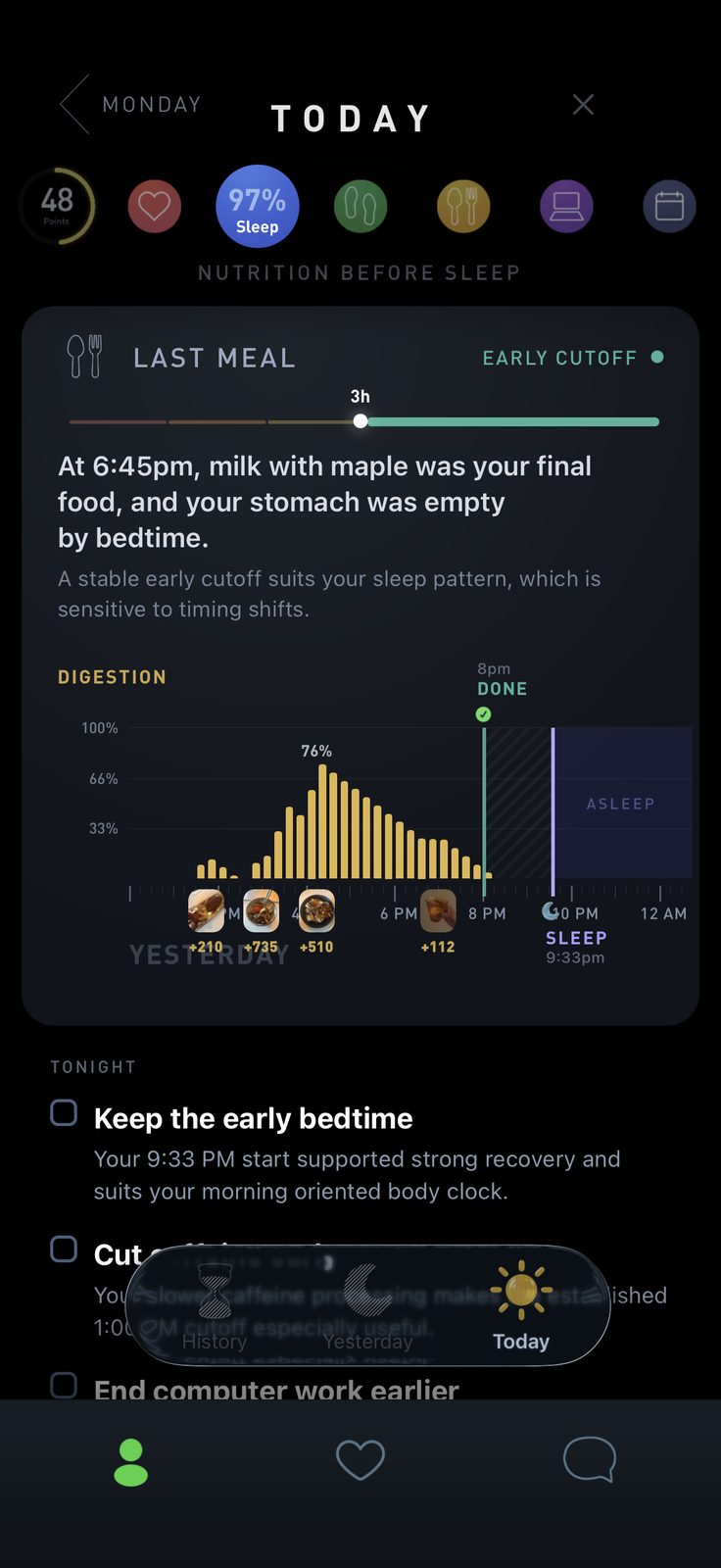
Food is the newest input. Photograph dinner with the food camera to compare your last meal, estimated digestion curve and bedtime on one timeline. Use the morning suggestions to choose a change for tonight, such as an earlier dinner or an earlier caffeine cutoff.
Dieters who slept 5.5 hours instead of 8.5 lost 55% less fat on the same calories, and lost more lean mass instead. (Nedeltcheva et al., Annals of Internal Medicine, 2010). If the scale is not moving, your nights are the first place to look.
Nutrition Before Sleep is included in Gyroscope One.
Your whole night, analyzed for you
Behind each night the app looks at hundreds of variables on your behalf, then hands you the handful that matter today. Every metric comes with a plain-language explanation, its own trend, and the science behind it.
Heart rate and HRV. Compare your overnight measurements with your own history to see when they change. Fitness, illness, training and other factors can affect them. Values also differ between people and devices, so context matters when interpreting a change.
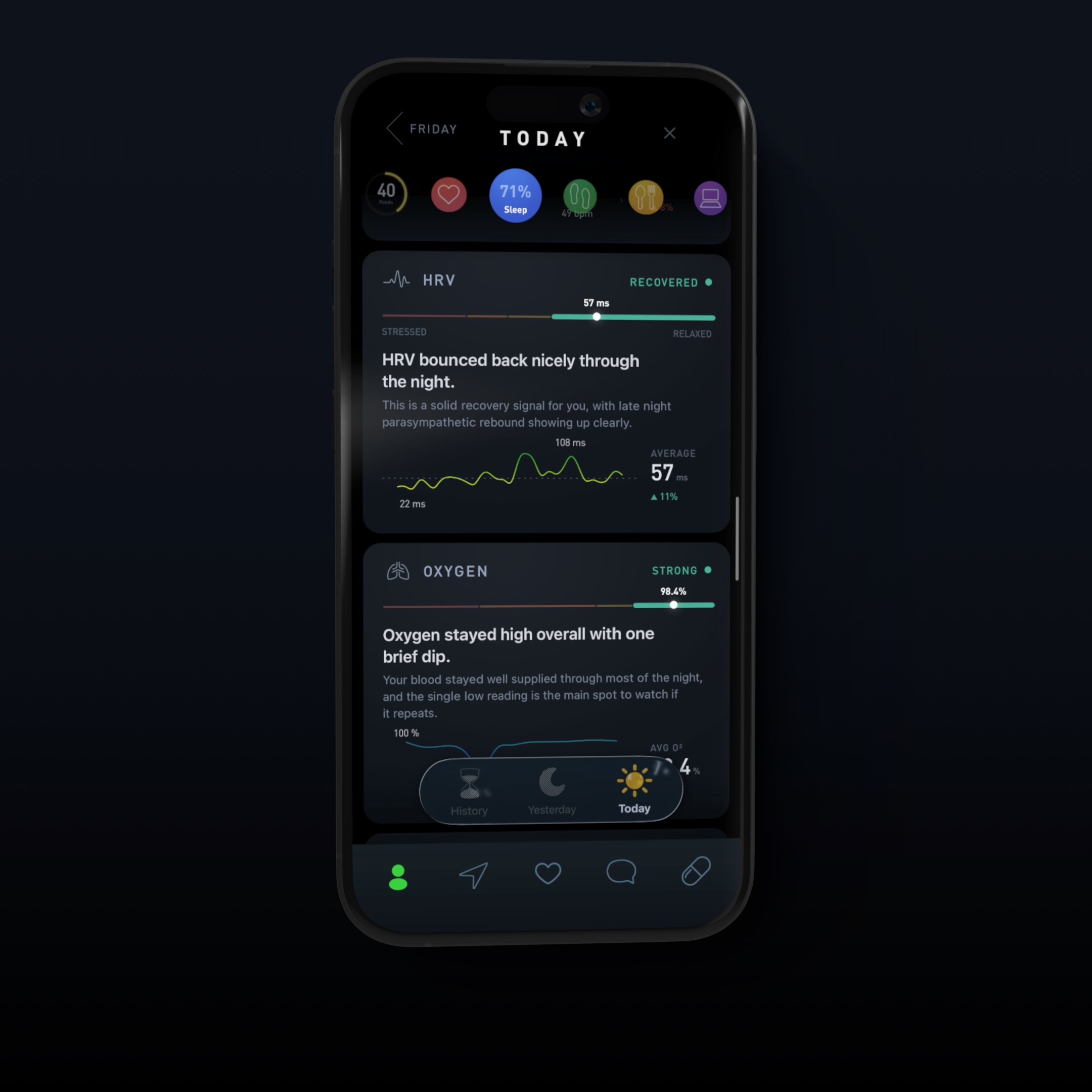
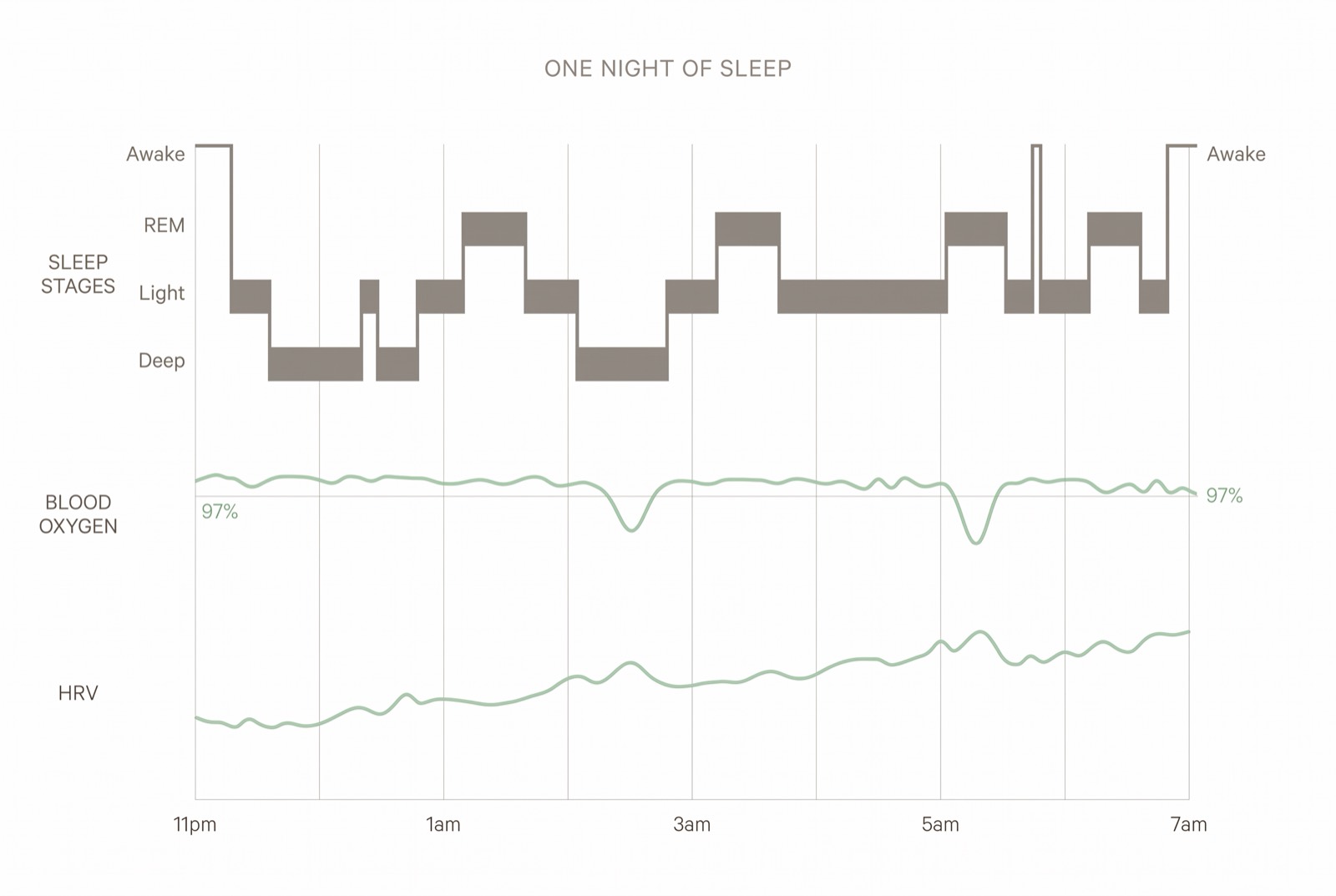
Oxygen and breathing. These can show a repeated overnight pattern that hours in bed will never reveal. Sleep apnea is common in adults and most cases are never diagnosed. Wearables cannot diagnose it, but repeated oxygen dips, especially with snoring, gasping, morning headaches or daytime sleepiness, are a reason to bring the pattern to a clinician.
Stages, temperature and Time to First REM. The report shows wearable estimates of deep, light and REM sleep. Time to First REM is the interval from sleep onset to the first detected REM period. Compare these estimates and wrist temperature across nights alongside your other measurements.
Sleep Debt and the Sleep Battery
Sleep debt now gets its own meter, calculated independently from the nightly score. The app learns your observed sleep need from your own history, then tracks the gap: sleep 6.1 hours against a 7.1-hour need and about an hour goes on the tab. The Sleep Battery shows how charged you are from the last seven nights, so a strong week and a rough week look different even when last night was the same.
Two weeks of 6-hour nights produced cognitive deficits equal to two full nights without sleep, while people rated themselves only slightly sleepy. (Van Dongen et al., Sleep, 2003). You cannot feel debt building, which is why the app meters it for you.
Your coach watches so you do not have to
Ask your coach about changes in your sleep and possible habits to try. The report includes trends so you can compare several nights and follow what happens as your routine changes.
A 2010 meta-analysis of 16 studies covering about 1.38 million people found that regular short sleepers had roughly 12% higher risk of death over follow-up, and long sleepers about 30% higher, compared with people sleeping around seven to eight hours. (Cappuccio et al., Sleep, 2010). The pattern over weeks is the number that matters, and the trend view is built to show it.
If you want to go deeper, the raw data, charts and graphs behind each night are all there, and the Weekly Review puts sleep next to training, food, mood, travel and phone time so you can see the whole week in one place.
Works with the wearable you already use
Apple Watch, Oura, Whoop, Fitbit and Garmin all feed the sleep system. Apple Health is the primary source on iPhone, and Oura and Garmin can be connected directly in Settings to import metrics like HRV that do not pass through Apple Health. The exact signals in a report depend on what your device records.
If you work nights, turn on nonstandard sleep and your main sleep is no longer split across two dates. Naps are supported. And the whole system runs in 50+ languages.
How to use it tonight
Update to the latest version of Gyroscope and wear your tracker to sleep. In the morning, open Sleep to explore your report. Your first report is there after one night.
After a week, change one thing: a steadier wake time, an earlier last coffee, or an earlier last meal. Then watch what the next week of reports says about it.